Tide planning guide
Choosing tides for a beach walk
Tide direction can matter as much as low-tide time. Read the curve, learn your route, and keep changing conditions in view.
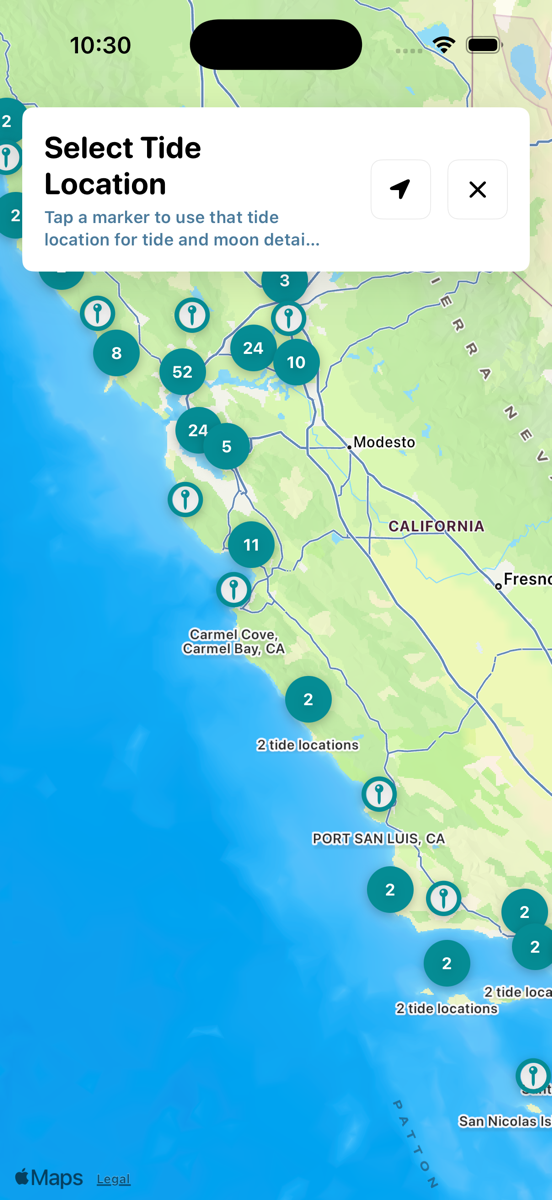
1. Pick the closest useful station
Tide stations represent specific locations. Nearby beaches can differ due to coastline shape, inlets, and local terrain. Use a station that matches your route as closely as possible.
2. Read direction, not only extremes
A falling tide can reveal more beach during a walk. A rising tide can reduce available space. The chart curve shows both direction and pace.
3. Check route pinch points
Headlands, rocks, driftwood, and access stairs can limit a route before predicted high tide. Never assume forecast height guarantees access.
4. Recheck before leaving
Review marine alerts, wind, waves, and daylight. Observe local surf and posted guidance. Turn back early when access changes.
Official starting points
See tide direction at a glance.
Tidecast keeps the curve, daylight, conditions, and saved locations together.
Get Tidecast for $3.99