
Tide planning guide
How to plan a tidepooling trip
Good tidepooling plans start with low-water timing. Then daylight, access, weather, waves, and local rules shape the outing.
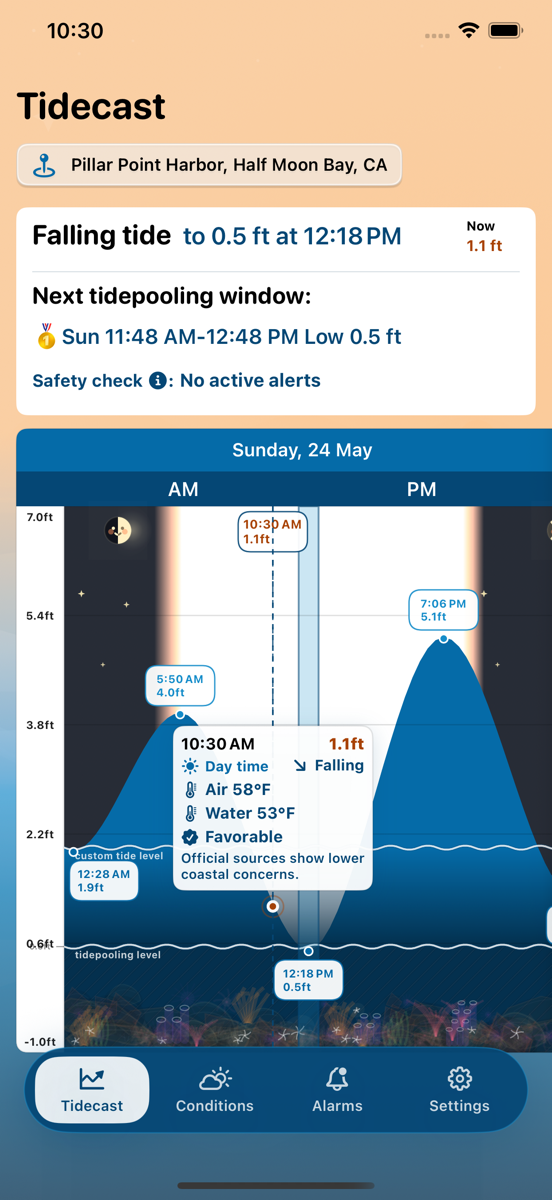
1. Compare low-tide height
Lower predictions can expose more intertidal area. The useful height varies by beach, terrain, and access point. Compare forecasts with places you already know.
2. Check the whole window
Do not plan around one timestamp alone. Look at how quickly water falls before low tide and rises afterward. Leave time for the walk back.
3. Add daylight and conditions
Check daylight, weather, wave forecasts, marine alerts, and what you can see locally. Forecasts change. Rocks and access routes can stay wet or slippery.
4. Protect the tide pools
Watch without removing animals, shells, or rocks. Step on bare rock where local guidance permits. Follow posted closures and protected-area rules.
Official starting points
Keep low-tide windows close.
Tidecast shows Tidepooling Mode, daylight, and nearby conditions together.
Get Tidecast for $3.99